
In a multi-city protest on Monday, a large number of company secretaries (CS) and chartered accountants (CAs) came together to seek extension of the deadline for annual filing due to glitches in the ministry of corporate affairs (MCA) portal. According to the Companies Act, firms are supposed to submit Form AOC 4 for filing of the balance sheet within 30 days of holding the annual general meeting (AGM). This deadline was over on October 29.

If that happens, India's economic size will be just shy of $20 trillion and its annual per capita income will be about $10,000, when the country celebrates its centenary of independence.

Various indicators make it amply clear that there are grave challenges facing the new government of Chief Minister Nitish Kumar, reports Indivjal Dhasmana.
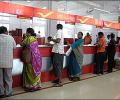
The staff at post offices misappropriated Rs 95.62 crore of public money between November 2002 and September 2021, the Comptroller and Auditor General has said. The money may seem small but it is what common citizen invested in post office savings, the oldest and the largest banking system in the country. The system serves the investment needs of urban and rural clients through schemes such as savings bank, recurring deposits, time deposits, national savings certificates, kisan vikas patras, public provident fund, monthly income account scheme, sukanya samriddhi accounts and senior citizens savings scheme.
Income-tax payers fear they will receive notices from the government because the annual information statement (AIS) provided by the I-T department in many cases is showing incomes in excess of their earnings. The Central Board of Direct Taxes (CBDT) has dismissed these fears as unfounded. The deadline for filing income-tax returns (ITRs) for the assessment year 2022-23 ended on July 31.
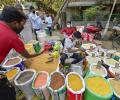
The impact of fiscal measures announced by the government to contain inflation will be seen in the next few months because of the base effect, reports Indivjal Dhasmana.

Moody's Investors Service has warned that India, along with the Philippines, Thailand, and Vietnam are highly vulnerable to volatile food and energy prices in the Asia-Pacific region as the Russia-Ukraine conflict continues to disrupt supplies and raise the cost of agricultural products, especially cereals and vegetable oils, as well as fertilizers and other agricultural inputs. This is so because these countries have a higher weighting of energy and food prices in their consumer price index (CPI) baskets, Moody's said in its report released on Tuesday. The weighting of energy and food in overall Indian CPI stands at over 55 per cent.

The Union government will take a bit longer to introduce the much-awaited labour codes even as the majority of states and Union Territories (UTs) have framed rules on them. There were speculations that these would be introduced from July 1. While 30 states and UTs have framed rules on the code on wages, 25 of them have done so on industrial relations. Of the two remaining codes, 24 states and UTs have framed rules on social security and 23 on occupational safety, health, and working conditions (OSH), sources said.

The government expects indirect tax collection to be lower than the Budget Estimate (BE) of Rs 13.38 trillion this fiscal year, despite prospects of netting goods and services tax (GST) in large amounts, Revenue Secretary Tarun Bajaj has said. "Indirect tax collection may see lower realisation than budgeted on account of cuts in excise and customs duties. "We could see a shortfall of about Rs 1.5 trillion on account of those," he told Business Standard.
With inflation remaining at elevated levels, central banks around the world, including the Reserve Bank of India (RBI), will kill excess demand in economy over the next six to eight months, sources in the know said. They also indicated that there could be a rate hike in June, when the inflation forecast for the current financial year would be raised. The RBI, the sources said, might announce more steps such as raising the limit on held-to-maturity (HTM) bonds to support government borrowings but might not come out with any further quantitative easing GSAP (Government Securities Acquisition Programme) measures.

'Our competitiveness with China is very important.' 'If the exchange rate depreciates, it is good for us because it helps in our competitiveness.'

While the likelihood of these states going the Lanka or Greece way may be an alarming assessment, the financial situation of some states such as Punjab and West Bengal is indeed quite weak.

Their implementation is expected to create investment owing to improving ease of doing business as well as initiating pro-worker measures.
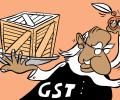
If other states follow suit, it is going to become difficult for the GST Council to decide on the next stage of reforms.
However, it may still not change its stance on the policy rate as inflationary pressures are coming from high commodity prices.

Since January 2021, the inflation rate in health has stood in the range of 6.08-8.44 per cent.

'We can go somewhere between 35 per cent and 40 per cent.'

'The signal is crude oil prices will rise, I am cutting my subsidy. Be prepared, prices will rise.'

While the infection has been mild in most reported cases, those below two years of age are showing signs of acute infection.

Deciding the goods and services tax rate on fryums papad could be a messy affair with the Appellate Authority for Advance Rulings (AAAR) of Gujarat now ruling that the ready-to-eat product would draw 18 per cent rate. In that connection, it slightly modified the ruling of the state-based Authority for Advance Rulings (AAR). The AAR had also ordered that these products would draw 18 per cent GST but under a different classification.
 © 2026 Rediff.com - Investor Information - Advertise with us - Disclaimer - Privacy Policy - Sitemap - Feedback - About us - Terms of use - Grievances